
Microchipping
We provide safe and affordable microchipping for your pet.

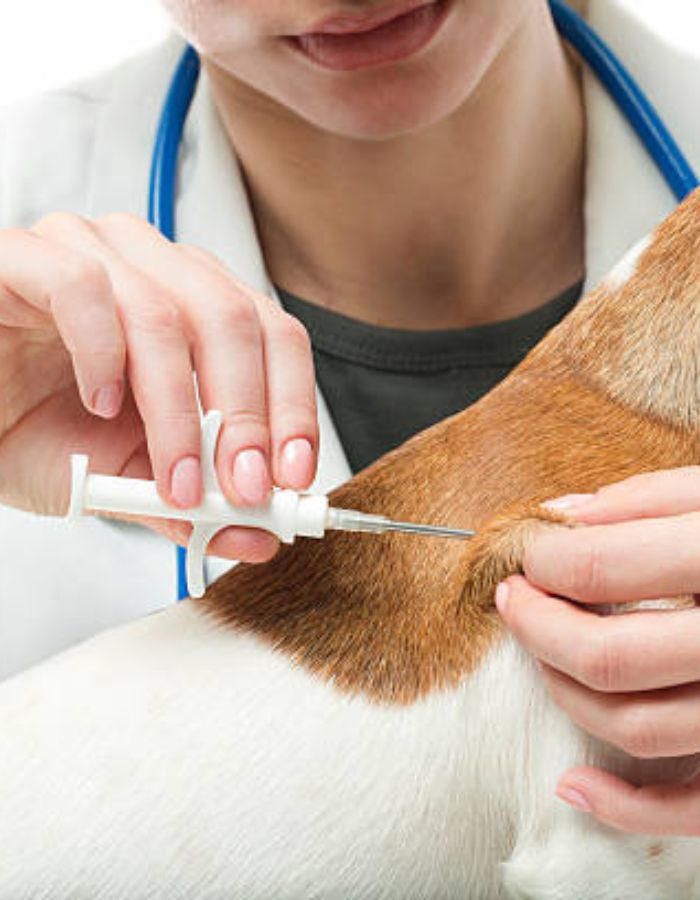
Dog & Cat Microchipping
Everyone who has lost a cat or dog knows the heartache that families feel when a treasured pet can’t be reunited with loved ones. Years ago, pet owners would track missing animals by tacking fliers to telephone poles or grocery store bulletin boards and then hoping for the best. Today, there is a far more effective, high-tech alternative – pet microchipping.
How Does a Pet Microchip Work?
A microchip is a tiny device, about the size of a grain of rice, that’s implanted just under your pet’s skin between the shoulder blades. It does not have a battery or GPS and cannot track your pet’s location.
If your lost pet is found, a veterinary clinic or animal shelter can scan the microchip. The scanner reads the chip’s unique identification number, which is linked to your contact information in a secure registry.
The microchip only works if your registration information is kept up to date. If you’ve moved or changed your phone number or email, be sure to update your pet’s microchip registration so you can be contacted right away if your pet is found.
Remember: A microchip isn’t a GPS tracker—it’s a permanent form of identification that can make all the difference if your pet ever gets lost.
At Valley Vetco, we believe it is smart for animal owners to make sure pets have appropriate identification collars with required rabies tags. However, a microchip implant can offer an extra measure of security for families who are looking for a lost animal. Albuquerque residents can find safe and affordable dog and cat microchipping services at Valley Vetco.
Why Choose A Microchip Implant?
About 12 million pets are brought to animal shelters every year. Of those pets, about 15 to 20 percent of lost dogs without identification are reunited with their owners, according to the National Council on Pet Population Study and Policy. Only two percent of cats without IDs find their way back home. Most successful reunions are reported when lost pets have identifying tattoos, tags, or microchips.
More than half of all missing dogs implanted with registered microchips were found by their owners as a result of the dog microchipping, according to one pet study. About 38 percent of missing cats with registered microchips were successfully claimed by their owners because of cat microchipping.
What Is The Procedure For Pet Microchipping?
Your veterinarian uses a syringe to insert a microchip just under your pet’s skin, between the shoulder blades. No anesthesia is needed for the simple procedure, and complications are rare. The tissue around the implant normally bonds to the chip within a day to hold it in place. Microchips work for as many as 25 years.
Is Microchipping Required by Law?
If you reside in the city of Albuquerque and/or Bernalillo county, your cat/dog is required to have a microchip.